United States of America Nexus Consortium | North America Hub | Global Risks Forum
United States of America
North America Hub
Strategy 2025–2030

Washington Nexus
US De-risking Consortium

United States' innovation and coordination hub for federal, state, and territorial risk governance—leveraging America's technological leadership, private sector innovation, and multi-level coordination capacity to deploy scalable, interoperable systems integrating disaster finance, climate adaptation, and decision-grade intelligence across all 50 states, territories, and tribal nations, advancing domestic and international standards for evidence-based disaster risk reduction.

Coverage
+15%
50+

States and territories across the United States of America

Population
4.7B
335M

US population protected by integrated disaster risk infrastructure

Capital
+$200M
$500M+

Risk capital mobilization target by 2030

Speed
Fast
<48h

Trigger-to-cash via ISO 20022 protocols

Verified
800+
6D

Risk domains with expert verification network

Partners
+250
1K+

Organizations across governments, IFIs, and communities

Risk data: INFORM Risk Index Mid 2025 • EC JRC

FORMATION TIMELINE

Building Global Risk Infrastructure

From inception to fully operational multilateral architecture—transparent roadmap showing where we are and where we're going

2025
Inception
GRF Formation
⬤ WE ARE HERE
2026
Founding Stage
Building Partnerships
2027
Regional Deployment
Consortiums Active
2028
Pilot Programs
Testing & Validation
2030
Full Operations
Global Scale
2025
Foundation Year
2026
Current Stage
5
Year Roadmap
193
Target Members
Why USA Nexus

North America Needs Next-Generation Coordination

Traditional disaster management and risk financing systems were designed for an era of isolated national hazards. With anthropogenic climate change intensifying multi-hazard scenarios, transboundary cascading risks amplifying regional vulnerabilities, and 4.7 billion people exposed to compound threats, the North America region requires institutional infrastructure commensurate with the velocity, complexity, and systemic interdependencies of 21st-century risk landscapes.

Legacy Systems: Too Slow

The Problem

Conventional disaster response mechanisms require protracted inter-ministerial coordination cycles spanning multiple fiscal years. Traditional indemnity insurance claims necessitate 6-12 month documentation and verification processes. By the time financial assistance reaches affected populations, livelihoods have collapsed and reconstruction windows have closed. The North America region experiences an estimated 10,000+ preventable fatalities annually attributable to delayed humanitarian and financial response, contravening Sendai Framework targets for mortality reduction.

Insurance Claims
6-12 months
Aid Disbursement
4-6 months
Regional Agreements
18-36 months

USA Nexus: Lightning Fast

The Solution

The USA Nexus implements parametric insurance instruments with blockchain-verified automatic trigger mechanisms, enabling disbursement within 48-72 hours of event confirmation. Integrated early warning systems provide 72+ hour advance notice, permitting anticipatory action and pre-positioning of resources. Artificial intelligence-powered risk intelligence platforms enable evidence-based preemptive measures. Distributed ledger technology creates immutable audit trails, eliminating documentation delays while maintaining fiduciary accountability and compliance with international financial standards.

Parametric Payouts
7 days
Smart Contract Release
Automatic
Early Warnings
72+ hours
North America Regional Hub

USA Nexus Consortium

A multilateral framework establishing North America as the global exemplar for sovereign digital infrastructure and trusted AI governance. Through federated architecture and diplomatic coordination, member states retain complete data sovereignty while accessing shared intelligence, parametric risk financing, and regional resilience mechanisms. Host countries gain strategic positioning as innovation leaders, enhanced disaster preparedness, and participation in shaping the future of digital multilateralism.

Strategic Vision & North America Leadership

USA Nexus serves as the North America regional hub of the Global Risks Forum (GRF), functioning as a "digital sovereignty embassy" and innovation nerve center for disaster risk reduction across 3 United States-Mexico-Canada Agreement region countries/jurisdictions covering 500M+ population.

Digital Sovereignty Embassy

USA Nexus operates as a "digital sovereignty embassy" - a sovereign-grade digital infrastructure hub that empowers North America nations to cooperate on data, compute, AI, and intelligence on their own terms. Unlike centralized platforms, this architecture ensures each nation retains full control over their data while benefiting from regional coordination.

Data SovereigntyNational ControlRegional CoordinationFederated Architecture

Innovation Nerve Center

As North America's innovation nerve center, the USA integrates cutting-edge zero-trust architectures, federated data zones, sovereign cloud enclaves, and clause-based smart licensing. The hub champions new norms for cross-border digital cooperation, from trusted data flow agreements to AI model governance aligned with OECD principles and EU AI Act provisions.

Zero Trust SecuritySmart LicensingAI GovernanceCross-Border Protocols

Technical Diplomacy Steward

GRF functions as the steward of "technical diplomacy" for sovereign digital cooperation - a global virtual embassy for digital sovereignty. It provides neutral diplomatic venue where governments, regulators, and industry negotiate shared schemas for data and AI, ensuring "every national deployment strengthens the shared commons rather than creating silos."

Multilateral ConveningStandards HarmonizationTrust FederationNeutral Venue
Community Governance

North America Regional Priorities

⚠️ ILLUSTRATIVE DEMONSTRATION — Quadratic Voting and Quadratic Funding mechanisms will become available soon for member states and verified stakeholders. Vote on priority risks and fund shared interventions through plural funding mechanisms (Quadratic Voting & Quadratic Funding) that democratically allocate resources across DRR, DRF, and DRI pools for an all-hazard, all-of-society approach.

Your Voice Credits: 99
Your Fund Balance: $10,000
CRITICAL

Hurricane & Tropical Storm Risk

Natural Disasters • Atlantic/Gulf Coast

12-15
Named storms annually (Atlantic)
55M+ at risk • $50B+ annual loss
Target States:
🇺🇸 Florida🇺🇸 Texas🇺🇸 Louisiana🇺🇸 N. Carolina🇺🇸 S. Carolina🇺🇸 Georgia

Intervention Objectives

DRR
Risk Reduction: Deploy 72-hour hurricane early warning systems with AI forecasting across Gulf Coast and Atlantic states. Install 500+ IoT weather sensors in hurricane corridors.
DRF
Risk Finance: Establish $8B parametric insurance pool with automatic payouts triggered at Category 3+ wind speeds (111+ mph). 24-hour disbursement for reconstruction.
DRI
Risk Intelligence: Integrate NOAA NHC, satellite feeds, and GOES-16/17 into unified hurricane tracking dashboard accessible to all states and FEMA regions in real-time.
Quadratic Voting
Your votes: 3 (9 credits)
2,847 community votes87% priority
3
9 credits
Quadratic Funding
You: $250
Community Contributions$1.2M
Matched Funding (3.2x)$3.8M
Total Raised
$5.0M
of $8B goal • 1,847 contributors
Contributing $100 → Matched to $320 (3.2x multiplier)
CRITICAL

Tornado & Severe Weather Risk

Meteorological • Tornado Alley

1,200+
Tornadoes per year (USA)
Tornado Alley • $10B+ annual damage
Target States:
🇺🇸 Oklahoma🇺🇸 Kansas🇺🇸 Nebraska🇺🇸 Texas🇺🇸 Alabama🇺🇸 Mississippi

Intervention Objectives

DRR
Risk Reduction: Build 15-minute tornado warning capability with 800+ real-time Doppler radar sensors across Great Plains. Integrate with NWS Storm Prediction Center and NOAA systems.
DRF
Risk Finance: Create $2.5B catastrophe bond pool with EF3+ tornado-triggered instant disbursement. Parametric insurance for 6 Tornado Alley states covering severe weather events.
DRI
Risk Intelligence: Deploy unified network monitoring severe weather patterns with AI prediction models. Real-time atmospheric instability and rotation tracking via NEXRAD network.
Quadratic Voting
Your votes: 5 (25 credits)
2,641 community votes82% priority
5
25 credits
Quadratic Funding
You: $500
Community Contributions$890K
Matched Funding (3.5x)$3.1M
Total Raised
$4.0M
of $2.5B goal • 2,156 contributors
Contributing $100 → Matched to $350 (3.5x multiplier)
CRITICAL

Wildfire & Drought Risk

Environmental • Western States

8M+
Acres burned annually (2024)
4.5M homes at risk • $20B+ losses
Target States:
🇺🇸 California🇺🇸 Oregon🇺🇸 Washington🇺🇸 Colorado🇺🇸 Arizona🇺🇸 Montana

Intervention Objectives

DRR
Risk Reduction: Deploy 48-hour wildfire forecasting across Western states. Install 200+ fire detection sensors and GOES-West satellite integration with real-time monitoring.
DRF
Risk Finance: Establish $1.2B wildfire insurance pool for 6 Western states. Parametric triggers based on acres burned and property damage for rapid recovery funding.
DRI
Risk Intelligence: Satellite-based wildfire mapping with 10m resolution. Integrate NOAA weather models with fuel moisture and wind forecasts for wildfire prediction.
Quadratic Voting
Your votes: 4 (16 credits)
2,489 community votes79% priority
4
16 credits
Quadratic Funding
You: $150
Community Contributions$740K
Matched Funding (2.9x)$2.1M
Total Raised
$2.9M
of $1.2B goal • 1,923 contributors
Contributing $100 → Matched to $290 (2.9x multiplier)
HIGH

Flooding & River Basin Risk

Hydrological • Major River Basins

41M
Americans at flood risk
Mississippi/Missouri basins • $15B+ annual
Target States:
🇺🇸 Louisiana🇺🇸 Missouri🇺🇸 Iowa🇺🇸 Illinois🇺🇸 Mississippi🇺🇸 Arkansas

Intervention Objectives

DRR
Risk Reduction: 24/7 cross-state flood surveillance network with USGS river gauges. AI-powered flood detection in major river basins with 48-hour forecasting.
DRF
Risk Finance: $500M flood emergency fund for rapid federal/state response. Emergency response financing for evacuations and infrastructure surge capacity.
DRI
Risk Intelligence: Real-time river level monitoring network tracking water levels. Integrate USGS stream gauges with NOAA precipitation forecasts for flood prediction.
Quadratic Voting
Your votes: 2 (4 credits)
1,923 community votes68% priority
2
4 credits
Quadratic Funding
You: $100
Community Contributions$620K
Matched Funding (2.6x)$1.6M
Total Raised
$2.2M
of $500M goal • 1,423 contributors
Contributing $100 → Matched to $260 (2.6x multiplier)
HIGH

Earthquake & Seismic Risk

Geophysical • Fault Zones

75%
M7+ probability in 30 years
San Andreas + Cascadia zones
Target States:
🇺🇸 California🇺🇸 Alaska🇺🇸 Washington🇺🇸 Nevada🇺🇸 Hawaii🇺🇸 Oklahoma

Intervention Objectives

DRR
Risk Reduction: Develop 6 comprehensive earthquake preparedness plans for high-risk states. Retrofit critical infrastructure and early warning systems via USGS ShakeAlert.
DRF
Risk Finance: Establish $1.5B earthquake insurance fund for recovery costs, building codes, and structural resilience support. Parametric payouts for M6+ events.
DRI
Risk Intelligence: Deploy 30+ seismometers across fault lines for real-time monitoring. USGS integration tracking ground motion and ShakeAlert early warning expansion.
Quadratic Voting
Your votes: 1 (1 credit)
1,456 community votes54% priority
1
1 credit
Quadratic Funding
You: $50
Community Contributions$380K
Matched Funding (2.1x)$800K
Total Raised
$1.2M
of $1.5B goal • 892 contributors
Contributing $100 → Matched to $210 (2.1x multiplier)
HIGH

Winter Storm & Cold Snap Risk

Meteorological • Polar Vortex

$23B
Texas 2021 winter storm losses
Increasing frequency • Grid failures
Target States:
🇺🇸 Texas🇺🇸 Oklahoma🇺🇸 Kansas🇺🇸 Nebraska🇺🇸 Wisconsin🇺🇸 Minnesota

Intervention Objectives

DRR
Risk Reduction: Deploy 20 winter-resilient energy grid improvements. Winterization protocols for power plants and natural gas infrastructure across vulnerable states.
DRF
Risk Finance: $800M winter storm emergency fund covering 6 states. Index-based insurance with temperature/snowfall triggers for rapid payout during grid failures.
DRI
Risk Intelligence: 50+ weather satellites providing temperature forecasts, polar vortex tracking, and cold snap prediction. Early warning system for extreme cold with mobile alerts.
Quadratic Voting
Your votes: 1 (1 credit)
1,278 community votes48% priority
1
1 credit
Quadratic Funding
You: $50
Community Contributions$290K
Matched Funding (1.8x)$520K
Total Raised
$810K
of $800M goal • 634 contributors
Contributing $100 → Matched to $180 (1.8x multiplier)
Credentialed Subject Matter Expert Network

Integrated Nexus Platforms

Interactive marketplace aggregator delivering 36+ professional enterprise opportunities across Research, Capital, Policy, Innovation, Foresight, and Diplomacy platforms—targeting the quintuple helix of Academia, Government, Industry, Civil Society, and Media.

Capital Platform

Decentralized finance infrastructure for parametric insurance, catastrophe bonds, and anticipatory action financing. Automated payouts via smart contracts triggered by verified IoT sensors and satellite data with <24hr settlement.

Parametric Insurance

Index-based insurance with automatic payouts when pre-defined parameters are met (earthquake magnitude >6.0, rainfall <50mm/month drought index, wind speed >120km/h, river discharge >5000 m³/s). No claims process—triggers verified by Chainlink oracles pulling from NOAA (US), NWS (US National Weather Service), USGS (US Geological Survey), Environment Canada, CONAGUA (Mexico), and North American meteorological networks IoT sensors.

Member State Engagement: Instant liquidity post-disaster, no lengthy claims adjudication or paperwork

Chainlink OraclesIoT SensorsSatellite Data (NOAA)Smart Contract TriggersAutomatic Payouts

Catastrophe Bonds

Tokenized catastrophe bonds (ERC-1400 security tokens) with automated risk tranching (AAA to B-rated) and secondary market liquidity via SEC-supervised platforms. Investors earn yield; capital released on qualifying disasters. SEC regulatory framework via Regulation D and digital asset securities frameworks.

For Investors: Uncorrelated returns (potential for yield generation), portfolio diversification, social impact

ERC-1400 (Security Tokens)Risk TranchingDEX LiquidityRegulatory Framework (Conceptual)Yield potential for yield generation

Quadratic Funding

Democratic capital allocation mechanism where matching pool amplifies small donations more than large ones (Gitcoin-style). Prevents plutocracy: $number_of_contributors matters more than $total_raised. Sybil resistance via BrightID and Proof of Humanity.

For Communities: Grassroots projects get funding proportional to community support, not whale donations

Quadratic MatchingSybil Resistance (BrightID)Proof of HumanityDemocratic AllocationGitcoin Grants Model

Collective Risk Pools

Mutual insurance pools governed by token holders (Nexus Mutual model). Members stake capital, underwrite risks, and share premiums/losses. Smart contract governance for claims approval with multi-sig override for edge cases.

For Participants: Earn underwriting fees, govern pool parameters, benefit from collective bargaining power

Token GovernanceMutual Insurance ModelClaims VotingMulti-Sig SafetyPremium Sharing

Anticipatory Action Financing

Pre-positioned capital released automatically when early warning indicators reach thresholds (70% drought probability triggers water distribution funds). Based on IFRC Forecast-based Financing methodology with smart contract automation.

For Humanitarian Orgs: Act before disasters strike—evacuate populations, pre-position supplies, fortify infrastructure

Forecast-Based FinancingPredictive TriggersPre-Positioned CapitalIFRC MethodologyEarly Action Protocols

Treasury Management & Audit

Multi-signature wallets (Gnosis Safe) with on-chain transparent audit trails. Diversified portfolio management (60% stablecoins, 30% DeFi yield, 10% BTC/ETH) optimized via Yearn-style strategies. All transactions cryptographically verifiable.

For Donors/Investors: Real-time transparency—every dollar tracked, every yield verified, zero opacity

Gnosis Safe Multi-SigPortfolio DiversificationDeFi Yield OptimizationAudit Trail (on-chain)Transparency Dashboard
Nexus Ecosystem Architecture

Platform Infrastructure Deployment

Complete Nexus Ecosystem (NXS) with 8 core modules for disaster risk reduction (DRR), risk financing (DRF), and decision intelligence (DRI). Deploy instantly with enterprise-grade infrastructure and open-source transparency.

Core NXS Modules

NXS-Core

HPC/GPU Risk-Simulation Engine

DRRDRI
Production Ready

High-performance computing engine for quantitative risk modeling and simulation. Leverages CUDA acceleration and quantum-ready compute infrastructure for complex disaster risk scenarios and probabilistic analysis.

CUDA
HPC Clusters
GPU Acceleration
Quantum-Ready
Monte Carlo
CUDA-Accelerated Risk Modeling
Quantum-Ready Compute Infrastructure
Large-Scale Probabilistic Simulations
Multi-Hazard Quantitative Analysis

NXS-Que

Cloud Orchestration & Automation

DRF
Production Ready

Enterprise-grade cloud orchestration and automation for global deployments. Kubernetes-native with serverless capabilities and blockchain audit trails for transparent, scalable infrastructure management.

Kubernetes
Serverless
Blockchain Audit
Terraform
Multi-Cloud
Kubernetes-Native Orchestration
Serverless Auto-Scaling (AWS Lambda/GCP Functions)
Blockchain Audit Trail & Provenance
Multi-Cloud Deployment (AWS/GCP/Azure)

NXS-GRIx

Global Risk Index & Data Standardization

DRI
Production Ready

Comprehensive global risk indexing with GIS/EO data fusion and AI-powered ETL benchmarks. Standardizes risk data across sources for decision-grade intelligence and interoperable analytics.

GIS/EO Fusion
AI-ETL
PostGIS
Benchmarking
Data Standards
GIS/EO Data Fusion (Sentinel/Landsat/Planet)
AI-Powered ETL Pipelines & Benchmarks
Global Risk Index Computation
Standardized Risk Data Exchange (UNDRR/IFRC)

NXS-EOP

Simulation & Analytics Platform

DRRDRF
Production Ready

Advanced scenario forecasting with Bayesian networks, copula models, and reinforcement lgenerating. Enables probabilistic risk analysis and adaptive decision-making for disaster risk reduction and financing.

Bayesian Networks
Copula Models
Reinforcement Lgenerating
PyMC3
TensorFlow
Bayesian Network Risk Modeling
Copula-Based Dependency Modeling
Reinforcement Lgenerating for Adaptive Policies
Scenario Forecasting & What-If Analysis

NXS-EWS

Multi-Sensor Early Warning System

DRR
Production Ready

Real-time multi-hazard early warning with IoT sensors, satellite data, and adaptive AI. Provides timely alerts for disaster risk reduction with automated dissemination and trigger protocols.

IoT Sensors
Satellite Data
Adaptive AI
CAP Protocol
Real-Time Stream
IoT Sensor Network Integration (15+ hazard types)
Satellite Early Warning (NOAA/ESA/JAXA)
Adaptive AI Alert Refinement
Multi-Channel Alert Dissemination (CAP/SMS/Push)

NXS-AAP

Anticipatory Action & Parametric Finance

DRF
Production Ready

Automated anticipatory action with smart contracts and oracle integration for parametric insurance and financing. Enables rapid disbursement based on pre-defined triggers and real-time risk data.

Smart Contracts
Oracles
Solidity
Chainlink
Parametric
Smart Contract Execution (Solidity/Vyper)
Oracle Integration (Chainlink/UMA)
Parametric Trigger-Based Disbursement
Automated Anticipatory Action Playbooks

NXS-DSS

Decision Support Dashboards

DRI
Production Ready

Policy and governance intelligence with explainable AI, business intelligence, and geo-visualization. Provides decision-makers with actionable insights and transparent recommendations.

Explainable AI
Business Intelligence
Geo-Visualization
SHAP
D3.js
Explainable AI (SHAP/LIME/Attention)
Business Intelligence Dashboards (Power BI/Tableau)
Geospatial Visualization & Analysis
Policy Scenario Comparison & Recommendations

NXS-NSF

Standards & Compliance Framework

DRF
Production Ready

Legal and financial integration framework with Web3 registries and ISO/IFRS mapping. Ensures compliance, standardization, and interoperability across financial and regulatory systems.

Web3 Registry
ISO/IFRS
OpenAPI
JSON Schema
SBOM
Web3 Standards Registry (ERC-721/ERC-1155)
ISO/IFRS Financial Mapping
Compliance Automation & Reporting
Legal-Financial Integration Framework

Cross-Cutting Technical Layers

Nexus Registry

Public Ledger of Datasets, Models & Clauses

Production Ready

Public blockchain-based registry ensuring versioning, open-data integrity, and API interoperability across all NXS modules under GCRI custodianship. Provides immutable audit trail and provenance tracking.

Blockchain Ledger
IPFS
Semantic Versioning
Merkle Trees
GCRI Custodianship
Version-Controlled Dataset/Model Registry
Open-Data Integrity & Provenance
API Interoperability (OpenAPI/GraphQL)
GCRI-Governed Custodianship

Nexus Passport

Identity & Zero-Trust Access

Production Ready

Decentralized identity with DID/VC credentials, OAuth/OIDC/ABAC, ledger-anchored attestations, and DAO-governed permissions. ML-driven adaptive risk scoring with offline/hybrid/inter-chain capabilities and zero-knowledge verification.

DID/VC
OAuth/OIDC
ABAC
ZK Proofs
DAO Governance
DID/VC Decentralized Credentials
Ledger-Anchored Attestations & DAO Permissions
ML-Driven Adaptive Risk Scoring
ZK Verification (No Raw PII Shared)

N-DIPA

Data Infrastructure Platform Architecture

Production Ready

Multi-tier zero-trust data stack: Edge (IoT/EO with TEEs) → Federation (FL/SMPC) → Verification (ZKPs, signatures) → Ledger (Merkle-audited) → Access (Passport/ABAC). Air-gapped, sandboxed, and fully auditable.

TEE Enclaves
Federated Lgenerating
SMPC
ZKP
Merkle Audit
Edge Tier: IoT/EO with TEE Enclaves
Federation: FL/SMPC Privacy-Preserving Compute
Verification: ZKPs & Digital Signatures
Ledger: Merkle-Audited Immutable Records

Treasury & Execution Rails

NTG, PITs, SPCs & Automated Disbursement

Production Ready

Nexus Treasury Grid (NTG) federated ledger with Proof-of-Integrity Tokens (PITs) for audit and Smart Program Contracts (SPCs) on Nexus Ledger. Direct NXS-EWS → NXS-AAP integration for streamlined disbursements.

NTG Ledger
PITs
SPCs
Auto-Disbursement
Multi-Sig
Nexus Treasury Grid (NTG) Federated Ledger
Proof-of-Integrity Tokens (PITs) for Audit
Smart Program Contracts (SPCs) Execution
NXS-EWS → NXS-AAP Trigger Disbursements

Complete Platform Deployment

Frequently Asked Questions

Implementation Guide

Common questions from developers and national agencies about USA Nexus deployment and integration

For Developers

What technology stack is USA Nexus built on?

Core Stack: Kubernetes (v1.28+), Docker, PostgreSQL, Redis, RabbitMQ. Backend: Ruby on Rails (API modules), Python (AI/ML services), Node.js (real-time services). Frontend: React, TypeScript, Vite. Blockchain: Solidity smart contracts on EVM-compatible chains. Infrastructure: Multi-cloud (AWS/Azure/GCP) with Terraform IaC.

How do I deploy a Sovereign Data Zone (SDZ) locally?

Quick Start: Clone the NXS repository, run docker-compose up for local development. Production: Use Helm charts for Kubernetes deployment: helm install nxs-core ./helm/nxs-core. All configuration via environment variables for data residency, encryption keys, and API endpoints. Full documentation at docs/deployment/sdz-setup.md.

Is the source code truly open-source? What's the license?

License: Apache 2.0 - fully permissive, allows commercial use, modification, distribution, and private use. Repository: Public GitHub under GCRI organization. No Vendor Lock-in: You own your deployment, can fork the codebase, and modify as needed. Contribution: Open to community PRs with CLA (Contributor License Agreement).

How does cross-border data sharing work without exposing raw data?

Federated Lgenerating: AI models travel to where data resides (compute-to-data). Only model weights or aggregated insights are shared. Secure Multi-Party Computation (MPC): Used for joint analytics without exposing individual datasets. Differential Privacy: Noise injection ensures no individual records can be reverse-engineered. Zero-Knowledge Proofs: For verification without revealing underlying data.

What APIs are available for integration with national systems?

REST APIs: For data ingestion, alert retrieval, model registration. GraphQL API: For flexible querying of risk intelligence. WebSocket/SSE: For real-time event streaming. Standards: CAP (Common Alerting Protocol) for disaster alerts, STIX/TAXII for threat intelligence, FHIR for health data. Authentication: OAuth 2.0, mTLS for machine-to-machine, API keys for development.

How do I contribute AI models to the Nexus Model Registry?

Process: 1) Package model with metadata (ONNX/TensorFlow SavedModel format). 2) Submit via Model Registry API with provenance (training data, validation metrics). 3) PNG validators review and test model. 4) Upon approval, model receives cryptographic signature and is published. Requirements: Model card documentation, safety case, bias audit, explainability metrics. Licensing: Use ClauseCommons templates for usage rights.

For National Agencies

How is data sovereignty legally guaranteed?

Legal Framework: Bilateral Data Sharing Agreements (DSA) signed with each country, subject to participating nationsal law. Technical: All data resides in your jurisdiction (on-premises or sovereign cloud). Audit Rights: Full access logs, right to inspect, revoke access anytime. Compliance: GDPR, PDPA, AADMER compliant. Exit Clause: You can disconnect from network without data loss.

What is the cost to become a host country?

Contribution: Scaled by GDP tier: Large (>$500B) $2M/yr, Medium ($100-500B) $1M/yr, Small (<$100B) $500K/yr, LDCs $100K/yr. Included: Software licenses, regional hub access, training (50-100 officials), technical support. Infrastructure: You provide local servers/cloud (~$200-500K/yr depending on scale). public investment efficiency: 4-7x return through disaster loss reduction.

How long does deployment take from MoU to operational?

Timeline: 6-9 months for full deployment. Phase 1 (Month 1-2): MoU signing, legal framework, data classification. Phase 2 (Month 3-5): Infrastructure setup, SDZ deployment, integration with national systems (meteorology, disaster agencies). Phase 3 (Month 6-9): Training, testing, live pilot with non-critical data, full production. Fast Track: 3-4 months possible with pre-existing infrastructure.

How do parametric insurance payouts work in practice?

Trigger Setup: Define disaster thresholds (e.g., wind speed >150 km/h, rainfall >200mm/24h, earthquake >6.0 magnitude). Monitoring: Nexus monitors real-time data from satellites, sensors. Validation: When threshold met, PNG validators confirm data quality. Payout: Smart contract auto-releases funds from escrow to designated government account within 7 days. No Claims Process: Eliminates paperwork and delays.

What training and capacity building is provided?

Technical Training: 5-day intensive for IT teams on SDZ deployment, Kubernetes ops, API integration. Policy Workshops: 2-day sessions for policymakers on governance, data sharing agreements, legal frameworks. Disaster Management: 3-day training for disaster agencies on EWS usage, AAP activation, CAP alerts. Ongoing Support: 24/7 helpdesk, quarterly refresher training, online lgenerating portal. Certification: NXS Certified Administrator program.

How is USA Nexus governed? Who makes decisions?

Structure: Multi-stakeholder governance with 4 pillars: GRF (diplomacy), GRA (finance), GCRI (technology), NSF (standards). Regional Council: Each host country has 1 seat on North America Regional Council (annual meetings). Voting: Major decisions require supermajority (2/3). Transparency: All governance docs public, financial audits annual. Independence: No single country or corporation controls the network. Dispute Resolution: Mediation via UNESCAP if needed.

Government Decision Framework

Why Governments Join

De-risk United States portfolios through open-source federal architecture for exponential risks—federal to state to local scale across all 50 states

01 / ECONOMIC

Portfolio De-Risking & Foreign Investment

Technical infrastructure reducing systematic risks across national and regional portfolios

ANNUAL LOSSES
$200B+
Unmanaged disaster risk
INVESTMENT FLIGHT
40-60%
Post-disaster capital exit
NEXUS INFRASTRUCTURE
→ DHS + FEMA + state emergency management cross-jurisdictional intelligence
→ USD-denominated parametric instruments for multi-state disaster pools
→ Alaska, Hawaii, Gulf Coast, and Pacific territories climate adaptation financing
→ Regional supply chain risk optimization
02 / CNorth AmericaITY

Skills, Literacy & Credentialing

National ecosystem development through open-source education and verified credentials

RISK MANAGEMENT TRAINING
Multilingual training (English, Spanish)
PUBLIC LITERACY PROGRAMS
National Emergency Management Association (NEMA) capacity building + interstate credentialing
VERIFIED CREDENTIALS
National Incident Management System (NIMS) credentialing + state certifications
KNOWLEDGE TRANSFER

Full code access enables domestic technical capacity building + university research integration without vendor dependency

03 / INNOVATION

IP Development & Ecosystem Growth

Permissionless innovation fostering national tech ecosystems and IP generation

LOCAL STARTUPS
Build on open APIs
IP RETENTION
100%
National ownership
ECOSYSTEM BENEFITS
→ US Smart Cities Coalition integration + state innovation programs
→ National innovation corridors (Silicon Valley-Austin-Boston-Research Triangle)
→ Interstate commerce clause compliance + federal standards interoperability
→ USPTO coordination + state-level technology transfer programs
CORE FRAMEWORK

Full-Spectrum De-Risking Infrastructure

USA Nexus provides federal-state-local architecture covering all 50 states and territories and 60% of global population—enabling governments to de-risk portfolios, attract investment, build capacity, and develop ecosystems across the disaster-prone United States.

DE-RISKING DOMAINS
FISCAL
Disaster losses, budget volatility, debt risk
INVESTMENT
FDI confidence, capital flight, market access
CNorth AmericaITY
Skills gaps, literacy, workforce mobility
SOVEREIGNTY
Data control, IP ownership, tech autonomy
MULTILATERAL COORDINATION

GRF Complements—Not Competes With—Existing Multilateral System

Neutral technical infrastructure provider coordinating with UNDRR, UNDP, WHO, World Bank, and FEMA, DHS, USAID. GRF provides the protocols and standards; existing agencies remain primary responders and coordinators.

193
UN Member States
3
North American Integration
15+
UN Agency Partners
100%
Sovereignty Preserved
COMPETITIVE NEUTRALITY

GRF Doesn't Compete—We Certify, Standardize, and Connect

Like Linux Foundation for software or W3C for web standards—GRF provides protocols and certification, not products. Your proprietary technology remains yours; our open standards ensure interoperability.

Enterprise Partnership Framework

Why Enterprises Join

From multinational corporations to local SMEs—participate in shaping standards, accessing procurement, and building reputation through ecosystem leadership

01 / MARKET ACCESS

Procurement & IP Protection

Certified vendor directory, multi-government contracts, and clear IP licensing

ENTERPRISE BENEFITS
→ Certified Vendor Directory
→ Multi-government RFP access
→ IP protection via Apache 2.0
02 / STANDARDS

Influence Protocols

Shape technical standards ensuring your products remain compatible

PARTICIPATION
→ Technical Steering seats
→ Working group leadership
→ Early spec access
03 / REPUTATION

Ecosystem Leadership

Build brand through open-source leadership and global case studies

VISIBILITY
→ Certified vendor badge
→ Co-branded case studies
→ Summit presentation slots
Network Architecture

National Nodes

Distributed network architecture with 50+ state computational nodes coordinated by USA Nexus. Real-time risk intelligence powered by INFORM RISK Index 2025.

EXTREME
VERY HIGH
HIGH
MEDIUM
LOW
California

California

CA
FEMA RISK INDEX 2025
5.8 /10
VERY HIGH RISK
Wildfire 8.2
Earthquake 7.5
Drought 6.8
POPULATION
39.5M
GDP/CAPITA
$89,540
REGION
West Coast
AFFECTED 2024
2.8M
NEXUS NODE
Florida

Florida

FL
FEMA RISK INDEX 2025
6.2 /10
VERY HIGH RISK
Hurricane 8.9
Flooding 7.5
Sea Level Rise 6.8
POPULATION
22.6M
GDP/CAPITA
$68,760
REGION
Southeast
AFFECTED 2024
3.2M
NEXUS NODE
Texas

Texas

TX
FEMA RISK INDEX 2025
5.4 /10
HIGH RISK
Hurricane 7.8
Tornado 7.2
Winter Storm 6.5
POPULATION
30.5M
GDP/CAPITA
$73,620
REGION
South
AFFECTED 2024
2.5M
NEXUS NODE
Louisiana

Louisiana

LA
FEMA RISK INDEX 2025
5.8 /10
VERY HIGH RISK
Hurricane 8.5
Flooding 7.8
Sea Level Rise 6.5
POPULATION
4.6M
GDP/CAPITA
$58,640
REGION
Gulf Coast
AFFECTED 2024
1.2M
NEXUS NODE
Oklahoma

Oklahoma

OK
FEMA RISK INDEX 2025
5.2 /10
HIGH RISK
Tornado 8.1
Drought 6.8
Earthquake 5.5
POPULATION
4.0M
GDP/CAPITA
$60,830
REGION
Plains
AFFECTED 2024
890K
NEXUS NODE
Arkansas

Arkansas

AR
FEMA RISK INDEX 2025
4.8 /10
HIGH RISK
Tornado 7.5
Flooding 6.8
Severe Storm 5.9
POPULATION
3.0M
GDP/CAPITA
$56,480
REGION
South
AFFECTED 2024
650K
NEXUS NODE
Mississippi

Mississippi

MS
FEMA RISK INDEX 2025
5.5 /10
HIGH RISK
Hurricane 7.9
Tornado 7.2
Flooding 6.5
POPULATION
2.9M
GDP/CAPITA
$51,420
REGION
Southeast
AFFECTED 2024
780K
NEXUS NODE
Alabama

Alabama

AL
FEMA RISK INDEX 2025
5.3 /10
HIGH RISK
Hurricane 7.5
Tornado 7.8
Flooding 6.2
POPULATION
5.1M
GDP/CAPITA
$59,890
REGION
Southeast
AFFECTED 2024
1.1M
NEXUS NODE
Georgia

Georgia

GA
FEMA RISK INDEX 2025
4.9 /10
HIGH RISK
Hurricane 6.8
Tornado 6.5
Flooding 5.8
POPULATION
11.0M
GDP/CAPITA
$72,840
REGION
Southeast
AFFECTED 2024
1.8M
NEXUS NODE
South Carolina

South Carolina

SC
FEMA RISK INDEX 2025
5.4 /10
HIGH RISK
Hurricane 7.8
Flooding 6.9
Tornado 5.5
POPULATION
5.4M
GDP/CAPITA
$64,150
REGION
Southeast
AFFECTED 2024
1.0M
NEXUS NODE
North Carolina

North Carolina

NC
FEMA RISK INDEX 2025
5.2 /10
HIGH RISK
Hurricane 7.5
Flooding 6.8
Wildfire 5.2
POPULATION
10.8M
GDP/CAPITA
$69,560
REGION
Southeast
AFFECTED 2024
1.7M
NEXUS NODE
Virginia

Virginia

VA
FEMA RISK INDEX 2025
4.5 /10
MEDIUM RISK
Hurricane 6.5
Flooding 5.8
Earthquake 4.2
POPULATION
8.7M
GDP/CAPITA
$85,200
REGION
Mid-Atlantic
AFFECTED 2024
980K
NEXUS NODE
Maryland

Maryland

MD
FEMA RISK INDEX 2025
4.3 /10
MEDIUM RISK
Hurricane 6.2
Flooding 5.9
Sea Level Rise 5.5
POPULATION
6.2M
GDP/CAPITA
$90,730
REGION
Mid-Atlantic
AFFECTED 2024
720K
NEXUS NODE
New York

New York

NY
FEMA RISK INDEX 2025
4.8 /10
HIGH RISK
Hurricane 6.8
Flooding 6.5
Winter Storm 5.8
POPULATION
19.5M
GDP/CAPITA
$103,200
REGION
Northeast
AFFECTED 2024
2.2M
NEXUS NODE
Pennsylvania

Pennsylvania

PA
FEMA RISK INDEX 2025
4.2 /10
MEDIUM RISK
Flooding 6.5
Winter Storm 5.8
Tornado 4.5
POPULATION
12.9M
GDP/CAPITA
$78,640
REGION
Northeast
AFFECTED 2024
1.4M
NEXUS NODE
New Jersey

New Jersey

NJ
FEMA RISK INDEX 2025
4.9 /10
HIGH RISK
Hurricane 6.9
Flooding 6.5
Winter Storm 5.2
POPULATION
9.3M
GDP/CAPITA
$95,370
REGION
Northeast
AFFECTED 2024
1.1M
NEXUS NODE
Connecticut

Connecticut

CT
FEMA RISK INDEX 2025
3.8 /10
MEDIUM RISK
Hurricane 5.8
Flooding 5.2
Winter Storm 4.9
POPULATION
3.6M
GDP/CAPITA
$102,560
REGION
Northeast
AFFECTED 2024
450K
NEXUS NODE
Massachusetts

Massachusetts

MA
FEMA RISK INDEX 2025
3.9 /10
MEDIUM RISK
Hurricane 5.9
Winter Storm 5.5
Flooding 4.8
POPULATION
7.0M
GDP/CAPITA
$108,450
REGION
Northeast
AFFECTED 2024
720K
NEXUS NODE
Rhode Island

Rhode Island

RI
FEMA RISK INDEX 2025
3.7 /10
MEDIUM RISK
Hurricane 5.8
Flooding 5.2
Winter Storm 4.5
POPULATION
1.1M
GDP/CAPITA
$88,320
REGION
Northeast
AFFECTED 2024
150K
NEXUS NODE
New Hampshire

New Hampshire

NH
FEMA RISK INDEX 2025
3.2 /10
MEDIUM RISK
Winter Storm 6.2
Flooding 4.8
Hurricane 3.9
POPULATION
1.4M
GDP/CAPITA
$95,540
REGION
Northeast
AFFECTED 2024
180K
NEXUS NODE
Vermont

Vermont

VT
FEMA RISK INDEX 2025
3.1 /10
MEDIUM RISK
Winter Storm 6.5
Flooding 5.2
Ice Storm 4.5
POPULATION
647K
GDP/CAPITA
$82,730
REGION
Northeast
AFFECTED 2024
85K
NEXUS NODE
Maine

Maine

ME
FEMA RISK INDEX 2025
3.5 /10
MEDIUM RISK
Winter Storm 6.8
Flooding 5.5
Hurricane 4.2
POPULATION
1.4M
GDP/CAPITA
$75,620
REGION
Northeast
AFFECTED 2024
195K
NEXUS NODE
Ohio

Ohio

OH
FEMA RISK INDEX 2025
4.5 /10
MEDIUM RISK
Tornado 6.5
Flooding 5.9
Winter Storm 5.2
POPULATION
11.8M
GDP/CAPITA
$74,450
REGION
Midwest
AFFECTED 2024
1.3M
NEXUS NODE
Michigan

Michigan

MI
FEMA RISK INDEX 2025
3.8 /10
MEDIUM RISK
Winter Storm 6.8
Flooding 5.5
Tornado 4.8
POPULATION
10.0M
GDP/CAPITA
$73,290
REGION
Midwest
AFFECTED 2024
1.1M
NEXUS NODE
Indiana

Indiana

IN
FEMA RISK INDEX 2025
4.7 /10
HIGH RISK
Tornado 6.9
Flooding 6.2
Winter Storm 5.5
POPULATION
6.9M
GDP/CAPITA
$69,840
REGION
Midwest
AFFECTED 2024
850K
NEXUS NODE
Illinois

Illinois

IL
FEMA RISK INDEX 2025
4.6 /10
HIGH RISK
Tornado 6.5
Flooding 6.2
Winter Storm 5.8
POPULATION
12.6M
GDP/CAPITA
$89,480
REGION
Midwest
AFFECTED 2024
1.4M
NEXUS NODE
Wisconsin

Wisconsin

WI
FEMA RISK INDEX 2025
3.9 /10
MEDIUM RISK
Winter Storm 7.2
Flooding 5.8
Tornado 4.5
POPULATION
5.9M
GDP/CAPITA
$77,920
REGION
Midwest
AFFECTED 2024
680K
NEXUS NODE
Minnesota

Minnesota

MN
FEMA RISK INDEX 2025
3.8 /10
MEDIUM RISK
Winter Storm 7.5
Flooding 5.9
Tornado 4.8
POPULATION
5.7M
GDP/CAPITA
$87,630
REGION
Midwest
AFFECTED 2024
620K
NEXUS NODE
Iowa

Iowa

IA
FEMA RISK INDEX 2025
4.8 /10
HIGH RISK
Flooding 7.2
Tornado 6.8
Drought 5.5
POPULATION
3.2M
GDP/CAPITA
$76,450
REGION
Midwest
AFFECTED 2024
420K
NEXUS NODE
Missouri

Missouri

MO
FEMA RISK INDEX 2025
5.0 /10
HIGH RISK
Tornado 7.5
Flooding 6.9
Earthquake 5.2
POPULATION
6.2M
GDP/CAPITA
$70,150
REGION
Midwest
AFFECTED 2024
890K
NEXUS NODE
Kansas

Kansas

KS
FEMA RISK INDEX 2025
5.3 /10
HIGH RISK
Tornado 8.2
Drought 6.5
Winter Storm 5.8
POPULATION
2.9M
GDP/CAPITA
$74,980
REGION
Plains
AFFECTED 2024
450K
NEXUS NODE
Nebraska

Nebraska

NE
FEMA RISK INDEX 2025
4.9 /10
HIGH RISK
Tornado 7.5
Drought 6.8
Flooding 5.9
POPULATION
2.0M
GDP/CAPITA
$78,430
REGION
Plains
AFFECTED 2024
320K
NEXUS NODE
South Dakota

South Dakota

SD
FEMA RISK INDEX 2025
4.2 /10
MEDIUM RISK
Winter Storm 7.2
Drought 6.5
Flooding 5.2
POPULATION
909K
GDP/CAPITA
$77,540
REGION
Plains
AFFECTED 2024
145K
NEXUS NODE
North Dakota

North Dakota

ND
FEMA RISK INDEX 2025
4.0 /10
MEDIUM RISK
Winter Storm 7.8
Flooding 6.2
Drought 5.5
POPULATION
779K
GDP/CAPITA
$82,340
REGION
Plains
AFFECTED 2024
125K
NEXUS NODE
Montana

Montana

MT
FEMA RISK INDEX 2025
4.3 /10
MEDIUM RISK
Wildfire 7.8
Winter Storm 6.9
Drought 6.2
POPULATION
1.1M
GDP/CAPITA
$74,290
REGION
Mountain
AFFECTED 2024
180K
NEXUS NODE
Wyoming

Wyoming

WY
FEMA RISK INDEX 2025
3.8 /10
MEDIUM RISK
Winter Storm 7.2
Drought 6.5
Wildfire 5.8
POPULATION
581K
GDP/CAPITA
$82,950
REGION
Mountain
AFFECTED 2024
95K
NEXUS NODE
Colorado

Colorado

CO
FEMA RISK INDEX 2025
4.9 /10
HIGH RISK
Wildfire 7.9
Drought 6.8
Winter Storm 5.9
POPULATION
5.9M
GDP/CAPITA
$96,830
REGION
Mountain
AFFECTED 2024
820K
NEXUS NODE
New Mexico

New Mexico

NM
FEMA RISK INDEX 2025
4.7 /10
HIGH RISK
Wildfire 7.8
Drought 7.2
Flooding 5.2
POPULATION
2.1M
GDP/CAPITA
$62,950
REGION
Southwest
AFFECTED 2024
350K
NEXUS NODE
Arizona

Arizona

AZ
FEMA RISK INDEX 2025
5.1 /10
HIGH RISK
Drought 8.2
Wildfire 7.5
Heat Wave 7.8
POPULATION
7.4M
GDP/CAPITA
$74,380
REGION
Southwest
AFFECTED 2024
1.2M
NEXUS NODE
Utah

Utah

UT
FEMA RISK INDEX 2025
4.4 /10
MEDIUM RISK
Drought 7.5
Wildfire 6.8
Earthquake 5.5
POPULATION
3.4M
GDP/CAPITA
$85,470
REGION
Mountain
AFFECTED 2024
480K
NEXUS NODE
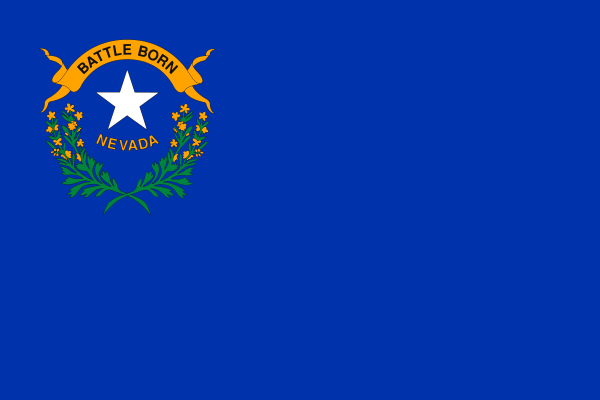
Nevada

Nevada

NV
FEMA RISK INDEX 2025
4.6 /10
HIGH RISK
Drought 7.8
Wildfire 7.2
Earthquake 6.5
POPULATION
3.2M
GDP/CAPITA
$77,650
REGION
West
AFFECTED 2024
520K
NEXUS NODE
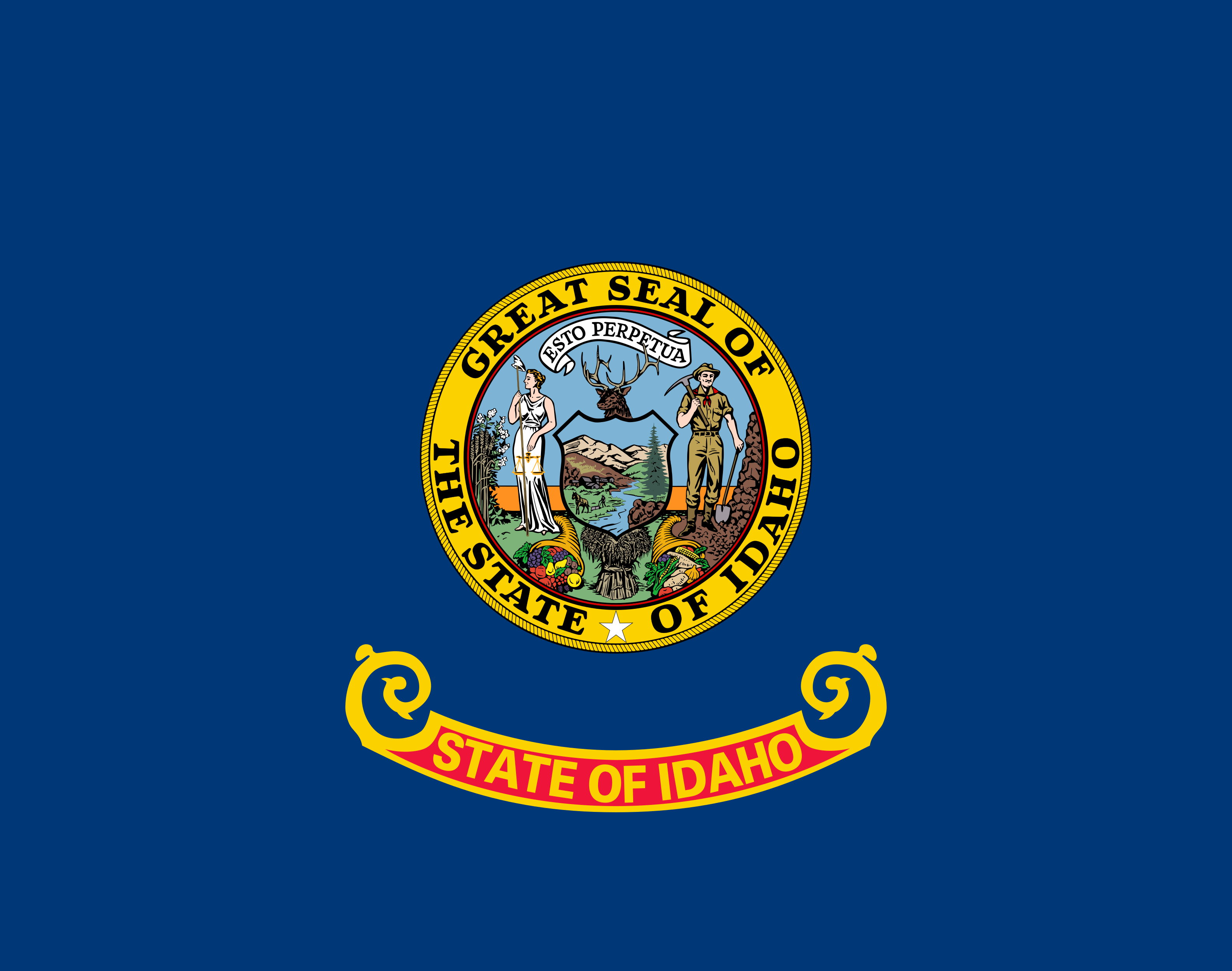
Idaho

Idaho

ID
FEMA RISK INDEX 2025
4.2 /10
MEDIUM RISK
Wildfire 7.5
Earthquake 6.2
Drought 5.9
POPULATION
1.9M
GDP/CAPITA
$70,380
REGION
Mountain
AFFECTED 2024
280K
NEXUS NODE
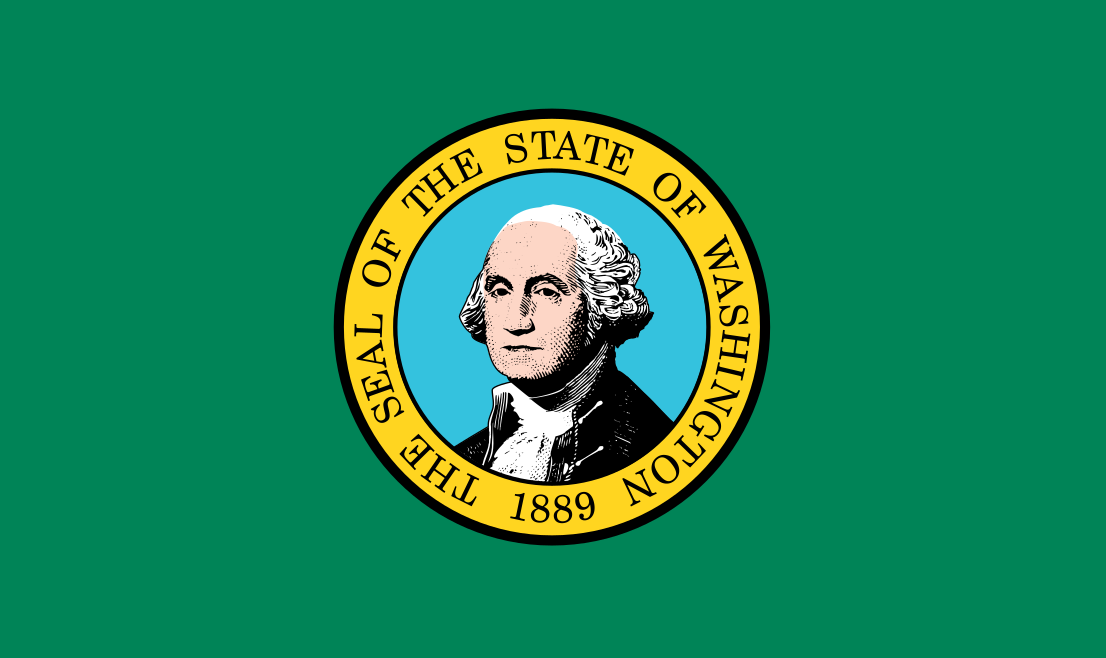
Washington

Washington

WA
FEMA RISK INDEX 2025
5.2 /10
HIGH RISK
Earthquake 7.8
Wildfire 7.2
Volcano 6.5
POPULATION
7.8M
GDP/CAPITA
$105,620
REGION
Pacific Northwest
AFFECTED 2024
1.1M
NEXUS NODE
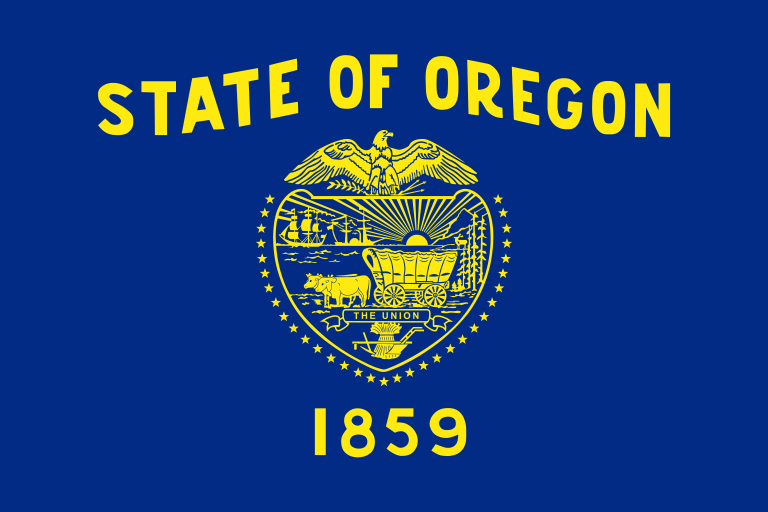
Oregon

Oregon

OR
FEMA RISK INDEX 2025
5.4 /10
HIGH RISK
Earthquake 7.9
Wildfire 7.8
Drought 6.2
POPULATION
4.2M
GDP/CAPITA
$85,390
REGION
Pacific Northwest
AFFECTED 2024
680K
NEXUS NODE
Alaska

Alaska

AK
FEMA RISK INDEX 2025
5.8 /10
VERY HIGH RISK
Earthquake 8.5
Wildfire 7.2
Winter Storm 6.9
POPULATION
733K
GDP/CAPITA
$89,430
REGION
Pacific
AFFECTED 2024
125K
NEXUS NODE
Hawaii

Hawaii

HI
FEMA RISK INDEX 2025
5.5 /10
HIGH RISK
Volcano 8.2
Hurricane 7.5
Earthquake 6.8
POPULATION
1.4M
GDP/CAPITA
$94,210
REGION
Pacific
AFFECTED 2024
220K
NEXUS NODE
Tennessee

Tennessee

TN
FEMA RISK INDEX 2025
4.9 /10
HIGH RISK
Tornado 7.2
Flooding 6.5
Earthquake 5.2
POPULATION
7.1M
GDP/CAPITA
$68,240
REGION
Southeast
AFFECTED 2024
950K
NEXUS NODE
Kentucky

Kentucky

KY
FEMA RISK INDEX 2025
4.8 /10
HIGH RISK
Tornado 7.5
Flooding 6.8
Winter Storm 5.5
POPULATION
4.5M
GDP/CAPITA
$63,950
REGION
Southeast
AFFECTED 2024
680K
NEXUS NODE
West Virginia

West Virginia

WV
FEMA RISK INDEX 2025
3.9 /10
MEDIUM RISK
Flooding 6.8
Winter Storm 5.9
Landslide 5.2
POPULATION
1.8M
GDP/CAPITA
$59,320
REGION
Appalachia
AFFECTED 2024
280K
NEXUS NODE
Delaware

Delaware

DE
FEMA RISK INDEX 2025
4.2 /10
MEDIUM RISK
Hurricane 6.5
Flooding 5.9
Sea Level Rise 5.5
POPULATION
1.0M
GDP/CAPITA
$84,320
REGION
Mid-Atlantic
AFFECTED 2024
150K
NEXUS NODE

US State Risk Rankings

#
STATE
RISK
HAZARD
VULN.
CAPACITY
#1
Florida
Florida
FL
6.2
8.9
5.2
4.5
#2
Louisiana
Louisiana
LA
5.8
8.5
6.2
4.2
#3
California
California
CA
5.8
8.2
5.5
4.8
#4
Alaska
Alaska
AK
5.8
8.5
5.0
4.9
#5
Mississippi
Mississippi
MS
5.5
7.9
6.5
3.8
#6
Hawaii
Hawaii
HI
5.5
8.2
4.8
5.2
#7
Texas
Texas
TX
5.4
7.8
5.2
4.5
#8
South Carolina
South Carolina
SC
5.4
7.8
5.8
4.2
#9
Oregon
Oregon
OR
5.4
7.9
4.8
5.0
#10
Alabama
Alabama
AL
5.3
7.5
6.0
4.0
#11
Kansas
Kansas
KS
5.3
8.2
5.0
4.5
#12
North Carolina
North Carolina
NC
5.2
7.5
5.5
4.5
#13
Oklahoma
Oklahoma
OK
5.2
8.1
5.2
4.2
#14
Washington
Washington
WA
5.2
7.8
4.8
5.0
#15
Arizona
Arizona
AZ
5.1
8.2
5.2
4.2
#16
Missouri
Missouri
MO
5.0
7.5
5.5
4.0
#17
Nebraska
Nebraska
NE
4.9
7.5
5.0
4.2
#18
Colorado
Colorado
CO
4.9
7.9
4.5
4.8
#19
Tennessee
Tennessee
TN
4.9
7.2
5.5
4.0
#20
New Jersey
New Jersey
NJ
4.9
6.9
5.2
4.5
#21
Georgia
Georgia
GA
4.9
6.8
5.5
4.2
#22
Iowa
Iowa
IA
4.8
7.2
5.0
4.5
#23
New York
New York
NY
4.8
6.8
5.2
4.5
#24
Kentucky
Kentucky
KY
4.8
7.5
5.2
4.0
#25
Arkansas
Arkansas
AR
4.8
7.5
5.5
3.8
#26
Indiana
Indiana
IN
4.7
6.9
5.2
4.2
#27
New Mexico
New Mexico
NM
4.7
7.8
4.8
4.5
#28
Nevada
Nevada
NV
4.6
7.8
4.5
4.5
#29
Illinois
Illinois
IL
4.6
6.5
5.2
4.2
#30
Virginia
Virginia
VA
4.5
6.5
5.0
4.5
#31
Ohio
Ohio
OH
4.5
6.5
5.2
4.2
#32
Utah
Utah
UT
4.4
7.5
4.2
4.8
#33
Montana
Montana
MT
4.3
7.8
4.5
4.5
#34
Maryland
Maryland
MD
4.3
6.2
5.0
4.5
#35
South Dakota
South Dakota
SD
4.2
7.2
4.5
4.5
#36
Pennsylvania
Pennsylvania
PA
4.2
6.5
5.0
4.2
#37
Idaho
Idaho
ID
4.2
7.5
4.2
4.8
#38
Delaware
Delaware
DE
4.2
6.5
4.8
4.5
#39
North Dakota
North Dakota
ND
4.0
7.8
4.0
4.8
#40
West Virginia
West Virginia
WV
3.9
6.8
5.0
3.8
#41
Wisconsin
Wisconsin
WI
3.9
7.2
4.2
4.5
#42
Massachusetts
Massachusetts
MA
3.9
5.9
4.5
4.8
#43
Connecticut
Connecticut
CT
3.8
5.8
4.5
4.8
#44
Minnesota
Minnesota
MN
3.8
7.5
4.0
4.8
#45
Michigan
Michigan
MI
3.8
6.8
4.2
4.5
#46
Wyoming
Wyoming
WY
3.8
7.2
4.0
4.5
#47
Rhode Island
Rhode Island
RI
3.7
5.8
4.2
4.8
#48
Maine
Maine
ME
3.5
6.8
4.0
4.8
#49
New Hampshire
New Hampshire
NH
3.2
6.2
3.8
5.0
#50
Vermont
Vermont
VT
3.1
6.5
3.5
5.0
Legal Notices

Compliance & Disclaimers

Please read these important legal notices carefully. This information is provided for transparency and regulatory compliance.

Not Financial or Investment Advice

This website provides information about technology platforms only. Nothing constitutes financial advice, investment advice, or recommendations to buy or sell.

Regulatory Compliance & Securities

Nothing constitutes an offer to sell securities or investments in any jurisdiction. Users must comply with all applicable laws and regulations.


Technology Platform Only

We are not a bank, financial institution, or investment advisor. We provide technology infrastructure and coordination tools only.

Risk Warnings & No Guarantees

Technologies carry inherent risks. No warranties or guarantees are provided. Use at your own risk. Potential for financial loss exists.

Data Protection & Privacy

We process personal data in compliance with GDPR, CCPA, POPIA, LGPD, and other data protection regulations. Data stored in sovereign zones.

UN & Multilateral Agency Disclaimer

References to UN agencies or international organizations do not constitute official endorsement or partnership by those entities.

Copyright & Intellectual Property

© 2025 Global Risks Forum. Content licensed under open-source and Creative Commons licenses. Trademarks are property of their owners.

Forward-Looking Statements

Future plans and projections are subject to change. Actual results may differ materially from those expressed or implied herein.

Have questions?